
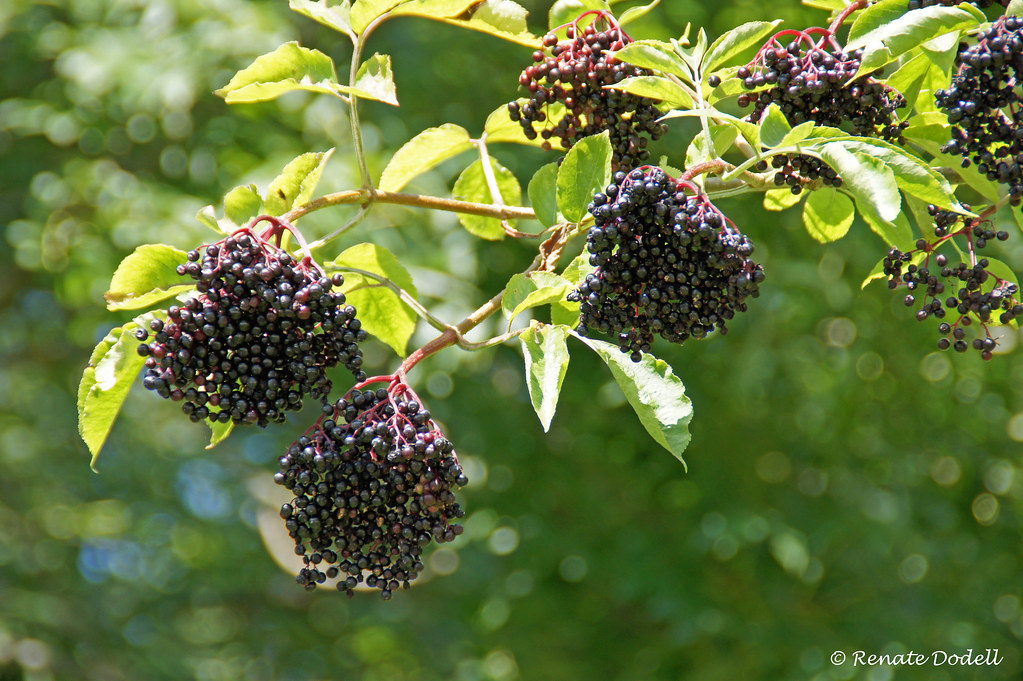
The American Black Elderberry, or Sambucus canadensis (also classified by some authorities as Sambucus nigra ssp. canadensis) grows across most of the eastern and central United States and parts of Canada. They thrive in USDA plant hardiness zones 3 through 9. They prefer rich, moist, and well-draining soil, but they tolerate clay, sand, and occasionally wet areas. They produce the most fruit in full sun, though they tolerate partial shade.
NOTE: Because elderberry may affect immune system activity, people with autoimmune conditions such as lupus or rheumatoid arthritis should talk with their healthcare provider before using it. Raw or unripe elderberries, stems, leaves, and roots contain cyanogenic glycosides that can cause severe nausea, vomiting, and diarrhea. Always use properly cooked or commercial preparations.
Elderberry syrup is a great way to extract the benefits for the whole family; other preparations such as tinctures, elixirs, and oxymels are also effective extraction methods. Here is a simple recipe you can make at home:
Homemade Elderberry Syrup
Makes about 3 cups of elderberry syrup
Base Elderberry Syrup Formula:
2 cups dried organic or wildcrafted elderberries (or 4 cups fresh/frozen berries)
4 cups cold water (purified or distilled water is best)
1 cup raw, local honey (substitute maple syrup or brown rice syrup for vegans or infants under the age of 1)
Extras:
1 organic cinnamon stick (high in antioxidants)
2 tsp. organic dried ginger (added flavor and may support digestion)
1/2 orange peel | (rich in vitamins)
2-3 whole cardamom seed pods | (may support digestion)
1/2 tsp cloves | (antioxidant-rich)
¼ cup rosehips | (rich in vitamin C)
1 small section (~2 inches) of organic vanilla bean (or 1 tsp vanilla extract)
INSTRUCTIONS
- Combine elderberries and water in a saucepan. If you are adding any extra ingredients (ginger, cinnamon, clove, etc…), add them along with the elderberries.
- Bring to a boil over medium heat and then reduce to a simmer.
- Partially cover and simmer for 30-45 minutes or until the liquid is reduced by half.
- Occasionally stir throughout the cooking process.
- When the liquid has reduced, turn off the heat and allow it to steep and cool to room temperature (about 30-45 minutes, however longer is better as it allows for an even better extraction).
- Using cheesecloth, strain the elderberry mixture into a large glass measuring cup or bowl. Discard spent herbs (called marc) in compost.
- Add pre-measured honey (or honey substitute) and stir until combined.
- Pour into a glass container, top with a lid, and store in the refrigerator (make sure to add a label with the date and recipe name).
- This recipe is highly customizable. Ginger, cinnamon, cloves, and cardamom are common companion herbs for elderberry. Using raw honey from a local source also supports immunity from local allergens in your own home area. Rosehips also go great with elderberry and provide an extra boost of Vitamin C.
*This recipe comes from https://www.starwest-botanicals.com/blog/elderberry-syrup-recipe-starwest-botanicals/